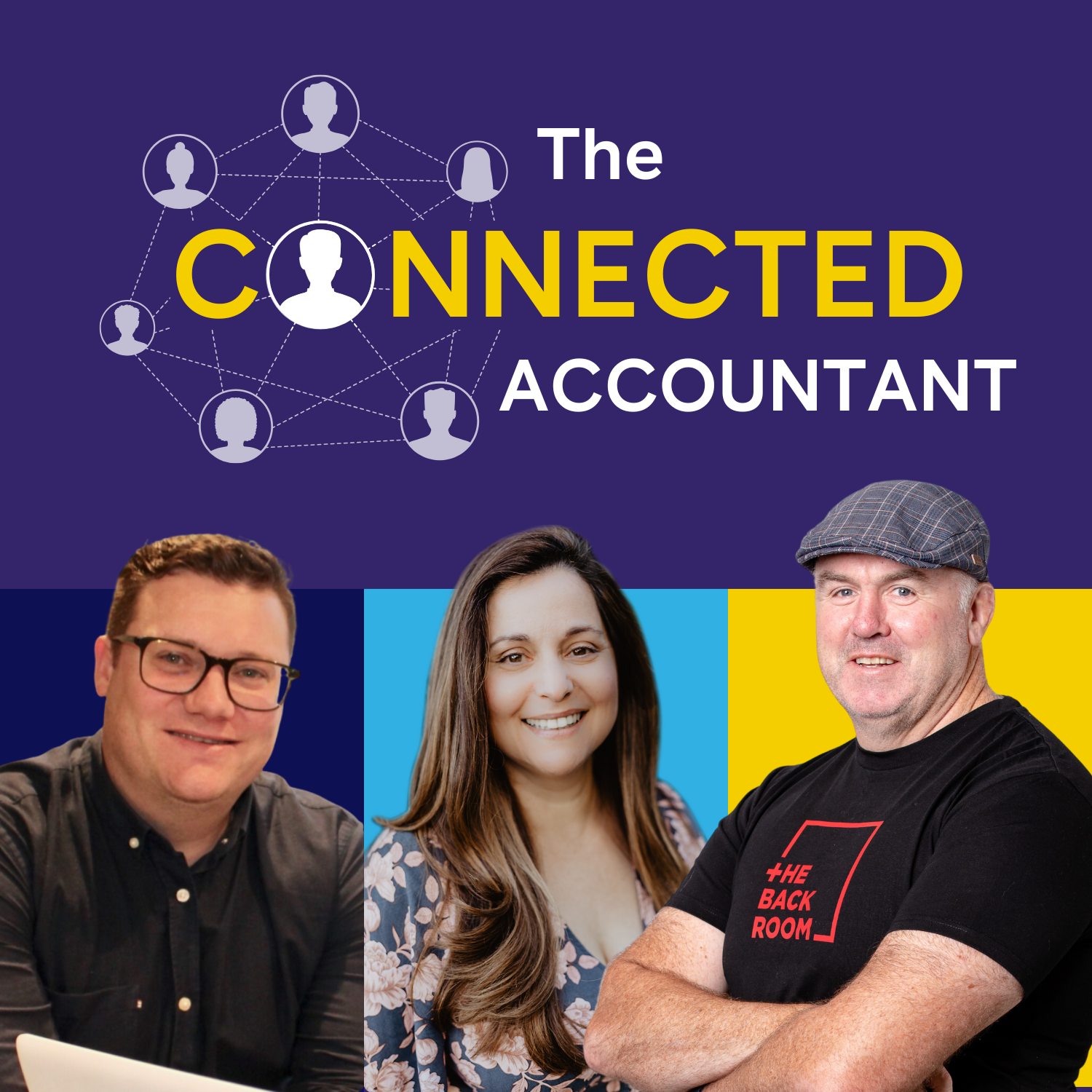
Episode 3
Adapting Your Accounting Business Model: Subscriptions, Advisory & Strategic Partnerships
Episode Summary:
In this episode, Talila Kroy, Wayne Findlay, and Ian Aldridge discuss how accountants must adapt their business models to thrive in a changing landscape. Learn why moving from hourly billing to subscription models, embracing advisory work, and building structured partnerships are essential for future-proofing your practice.
What You'll Learn:
- Why subscription models create stickier client relationships for accountants
- How to transition from compliance-focused work to advisory services
- The importance of becoming the trusted adviser on emerging topics like AI
- Why structured partnerships deliver faster results than ad hoc referrals
- How to leverage partnerships to access expertise without adding headcount
- The power of running workshops and events with strategic partners
Key Takeaways:
- Accountants need to move away from hourly billing to subscription models that encourage clients to seek advice freely
- Advisory work is becoming easier with AI tools, creating opportunities for accountants to add more value
- Structured partnerships with clear rules and expectations prevent confusion and protect all parties
- Becoming the expert on timely topics (like AI) positions you as the go-to trusted adviser
- Partnerships allow you to offer expanded services without hiring additional staff
Notable Quotes:
"If you want to become the trusted adviser, hourly rate charging for everything isn't the way to go. You need to create an environment with your clients where they can call you without worrying about being charged." - Wayne Findlay
"Going through that partner suitcase and working out how to present this in the correct format—we had partners that we were working with for five, ten years and they didn't know that we did that piece of work before." - Ian Aldridge
"It's about not doing that ad hoc but systemising it. Systemising is the key. All accountants understand the power of referrals—it's really about making it structured." - Talila Kroy
Roundtable Events
Information, including registration details, for Roundtable events for Accountants: https://thebackroomop.com/thepartnershipeffect
Panelist Information:
Talila Kroy - Emple
- Website: emple.com.au
- LinkedIn: linkedin.com/in/talila-kroy
- Specialisation: Building partner ecosystems for fast-growing businesses
Wayne Findlay - The Back Room
- Website: thebackroomop.com
- LinkedIn: linkedin.com/in/waynenz
- Specialisation: Offshoring solutions for accounting firms
Ian Aldridge - Progressive Legal
- Website: progressivelegal.com.au
- LinkedIn: linkedin.com/in/ianaldridge1
- Specialisation: NewLaw firm for growing Australian businesses
Production:
Co-host - Anthony Perl - Podcasts Done For You
- Website: podcastsdoneforyou.com.au
- LinkedIn: linkedin.com/in/adperl/
Transcript
Adapting your accounting business model, subscriptions,
2
:advisory, and strategic partnerships.
3
:Welcome to the Connected Accountant,
the podcast where we explore
4
:how strategic partnerships can
transform your accounting practice.
5
:I'm your co-host Anthony Pearl.
6
:At today we're exploring the.
7
:Fundamental shifts that
accountants need to make.
8
:Moving from hourly billing to
subscriptions, from compliance
9
:to advisory, and building the
partnerships that make it all possible.
10
:Talila Kroy: The best way to deal
with AI is to get ahead of it,
11
:and the same with partnership.
12
:Ian Aldridge: If you don't get ahead of
this now, you're gonna get left behind
13
:and it's happening really rapidly.
14
:It's fast.
15
:Wayne Findlay: If you want to become the
trusted advisor, the hourly rate charging
16
:for everything isn't the way to go.
17
:Anthony Perl (2): Joining me today
are our three regular panelists
18
:who bring incredible expertise
to the connected accountant, Tila
19
:Croy from Emel, Wayne Finley from
the back room, and Ian Aldridge.
20
:From Progressive Legal, let's
get into what will make you
21
:the connected accountant
22
:with people getting armed
with more and more information
23
:from AI and other sources.
24
:You have to become an expert in a
particular area and then have other
25
:experts that you can refer to along
the way, and that's the change that's
26
:happening and needs to happen in
accounting firms, isn't it Wayne?
27
:Wayne Findlay: Yeah, I think so.
28
:Like, you know, an niche like we
mentioned was, was tradies and, and
29
:my current business is accountants
and it all revolves around
30
:partnerships is how we market today.
31
:If you can imagine trying to do a
business plan back in, you know, in two
32
:thousands, you know, that was a huge
job that would take, you know, hours of
33
:work today with the, where AI is your
tool, it's a lot easier and so I think
34
:you can niche and you can make sure
that you tell your partners about that.
35
:Ian Aldridge: It's different for us
as lawyers, as accountants, where
36
:I've often said that if I came back
in another life, I'd come back as
37
:an accountant because I've seen how
sticky you can be to a business.
38
:We're still in this very
transactional scenario.
39
:Unfortunately, with our clients,
Australian businesses at least, are
40
:just not ready for a subscription
model that's fair and reasonable.
41
:There are others that are now
offering that, but that we receive
42
:endless complaints about those and.
43
:You know, they're just not
doing it in the right way.
44
:And we find that, you know, many
clients still want us to just,
45
:let's just do this one thing.
46
:Earn the trust, right?
47
:Let's just do this one thing first,
and then we'll do the next thing, and
48
:then the next thing, the next thing,
and do things in order of priority.
49
:Whereas good or bad, you know,
accountants have been forced really
50
:into providing monthly subscription.
51
:But obviously the work that accountants
do lends itself so well to that.
52
:You know, monthly rec, quarterly bass,
half yearly reports, either reports,
53
:Wayne Findlay: behavioral.
54
:But, but then a lot of that could
go like with ai, and that's why
55
:you just can't rely on that.
56
:And I think that's why the
accountants need to look at advisory.
57
:To have on top of the compliance.
58
:The compliance is probably the
easiest bit that AI can solve,
59
:Ian Aldridge: but still you
can have monthly meetings as
60
:part of that subscription.
61
:Wayne Findlay: And you
mentioned subscription.
62
:I think that's important too, is
if you want to become the trusted
63
:advisor, the hourly rate charging
for everything isn't the way to go.
64
:You're not going to get client
trust every time they ring up.
65
:Or pick up the phone to talk to you,
you're gonna get charged for it.
66
:So you need to create an environment
with your clients that a subscription
67
:is how we used to work and that
encompassed ad hoc phone calls and you
68
:know, having a meeting, a quick meeting.
69
:But what would happen from those?
70
:We, you would normally charge
in the old days, you would
71
:get additional work from that.
72
:There would be a project
that would come out of it.
73
:So I think setting yourself up.
74
:Yeah.
75
:So you can get additional
advice as a way to do it.
76
:Ian Aldridge: Yeah, and this is
something that I've been very envious
77
:of, accountants, is that, you know,
I'd sort of worked out that it,
78
:you kind of need to get to those.
79
:300 clients that are paying you the
monthly subscription, and then every
80
:month is a similar month, even in
January, which is horrible for US lawyers.
81
:Yeah.
82
:February sort of break even, but January
being a half month, you know, that's
83
:really, that's really tough on every law
firm, but it just means as well too, that
84
:you'll need less referral partners as an
accountant than you would do as a lawyer.
85
:So I have to go really hard.
86
:I'm gonna need to get, you know.
87
:Three to 500 referral partners,
whereas you're gonna get fast traction
88
:as an accountant if you're doing
this partner suitcase because you
89
:know, you'll get 20 referrals from
people, from your referral partners.
90
:And, and it won't, that, that, that
doesn't take long to get to 300 clients.
91
:Or if you want 300 more clients,
I think you'll get a lot of
92
:traction really quickly from it.
93
:I
94
:Wayne Findlay: think all accountants
need to market because out with the
95
:old and you want to get new one.
96
:So you need to continually
churn your clients over.
97
:'cause we all know you do have bad
clients or you have clients that they're
98
:just there for price or they're not
really, it's that 80 20 rule, isn't it?
99
:You just gotta continually get the
good and churn out the bad or the old.
100
:So I think.
101
:Even if you're successful now as
an accounting firm, you need to get
102
:good leads coming through all the
time so you can have a bit of client
103
:picking on who you're dealing with.
104
:Ian Aldridge: There's, and there's
naturally clients that fall
105
:out of the bucket that you've
gotta, you know, put back in.
106
:I see the opportunities
for accountants being.
107
:Like this is a really, really good
opportunity for accountants to leverage
108
:off these partners and partnerships and
you can do these presentations via Zoom
109
:or Teams or whatever you want to use.
110
:We just had one the other day with
someone in Perth who I've been hunting
111
:for a while now to softly to try and
get as I did have a relationship with
112
:another law firm before, and I saw that.
113
:Starting to fall apart.
114
:And so I sort of got, um, got
out our BD to reach out to her
115
:and, and, and organize a meeting.
116
:And we gave, and we did the presentation.
117
:And her feedback was, there's only
two people that have done this for
118
:me before, the first one who was a
business advisor and they've been
119
:working together for 10 years and
they refer work to each other up.
120
:All the time.
121
:And so she said, this
is really impressive.
122
:You're clearly putting a lot
of effort into this, you know,
123
:relationship before it even starts.
124
:And so I think we've now got a, we've
capitalized on that and referral partner
125
:and they're based in Perth where wherever
the other east coast of Australia.
126
:And she's happy to send
clients, you know, our way.
127
:Yeah.
128
:Anthony Perl (2): I think it's interesting
here that this is the changing nature
129
:of accounting firm in changing name
of businesses, but accounting firms
130
:have to be on the back of it, right?
131
:I mean, Tila, it's a good opportunity to
bring you in here in terms of thinking
132
:about the way they go about business
needs to be different and partnerships
133
:needs to be a central focus of that.
134
:Otherwise, they risk falling
behind everyone else.
135
:Talila Kroy: Exactly, and I think
accountants are very, shall we
136
:say, conservative people by nature.
137
:Majority wise, I, I don't wanna be
broad rush here, but they're known.
138
:There's not that many faster
doctors compared to maybe
139
:some other areas of business.
140
:But fortunately, this isn't an area
where you have to change so much.
141
:All accountants understand about the
power of referrals and the power of
142
:working as a trusted advisor with a,
surrounded by a network of excellence.
143
:So it's really about.
144
:Not doing that ad hoc, but
systemizing is the key.
145
:And that's like what Ian said
when he brought up his deck.
146
:We created that deck.
147
:So I know that deck has every single thing
that people need to know about progressive
148
:legals to be their good partner.
149
:And therefore that partner was not
only impressed, but educated and
150
:will bring him the right people.
151
:And for accountants, it's really,
particularly when they're moving
152
:more focused on the advisory space,
it's really quite straightforward.
153
:To take from their existing relationships
and existing network to elevate
154
:them from ad hoc to more proactive.
155
:And then to find those other ones that
they need and surround themselves with it.
156
:And there you have a winning formulas.
157
:All our focus will be on, on the
accounting and advisory partner
158
:suitcase that picks off in January.
159
:And yeah, we're very,
very excited about that.
160
:And both Wayne and Ian will feature
in that in different places as well.
161
:Yeah, so it's going to be.
162
:I know that it's going to be
transformative for every single
163
:accountant that's participating.
164
:Anthony Perl (2): Wayne, I just wanna
unpack a little bit further as well
165
:about what Tah was just speaking about
and and what you were talking about
166
:earlier in terms of this changing
face of the way accountants need to
167
:think about themselves and to start
looking at partnerships as being.
168
:An intrinsic part of their business.
169
:You know, are there some obvious ways to
start for them in terms of that rethinking
170
:the way the business should work?
171
:Wayne Findlay: Yeah, I was just
thinking there when em was talking
172
:about having your partners and how
you would, especially with AI and
173
:being a trusted advisors, if I was an
accountant today, I'd front foot that
174
:and become the trusted advisor on ai.
175
:As far as that and build some
partners around you that know ai.
176
:For example, I would run
some workshops with clients.
177
:'cause if.
178
:You think you've got issues with
AI in the accounting industry, your
179
:clients have the same issues as well,
and they're all thinking about it.
180
:So I would run some workshops or some
events, bring some partners in around AI
181
:and off that, build out some advice that
would help, you know, help those clients.
182
:So become the expert in ai.
183
:For your clients, so they go to you.
184
:That would be an example of something
I would look at doing right now.
185
:Anthony Perl (2): And Ian, I bring you
in here because that's the interesting
186
:thing about the legal profession
is that it's become known as being
187
:niched in different areas, uh, but
still at a reasonably high level.
188
:You know, criminal law, people
think about that and family law.
189
:What Wayne's talking about here is kind
of bringing that even further down.
190
:And in order to be, bring that further
down as you've talked to in previous
191
:episodes, you need to be the trusted
advisor that can recognize this is
192
:your niche, even within a niche.
193
:And then be able to have those other
partners that you can bring in to
194
:be able to do those other things.
195
:And that's the lesson that
accountants need to learn as well.
196
:Yeah, just had a whole bunch of ideas.
197
:Ian Aldridge: When Wayne just spoke,
then I guess we actually need to, we
198
:actually need to do that as the, as the,
as the law firm and, and specialize in
199
:AI and give our clients training and ai.
200
:And we've just recently implemented
AI into the business in the last
201
:two weeks because it's waiting for
the right solution to come along
202
:for small businesses, a whole bunch
of enterprise solutions right now.
203
:I'm guessing that's probably the same in,
in the, in the accounting financial space.
204
:But yeah, there's a huge opportunity
for accountants, I think.
205
:Because I know that there's a few
AI businesses that are targeting
206
:small firm accountants, you
know, not enterprise accountants.
207
:Right.
208
:Wayne Findlay: The automation's a
buzzword at the moment, which isn't
209
:really ai, but it's automation and
there's a lot of people out there saying
210
:they're the experts in automation.
211
:That's where accountants should become
involved and helping out with that.
212
:Yeah.
213
:Ian Aldridge: I think there's a few
businesses now that are specifically
214
:targeting the small to medium SMEs for ai,
for accounting space, and yeah, if I was
215
:an accountant, I reckon I'd be contacting
every single one of them and working out
216
:what can they do and what can, how can I
help my clients and stress testing every
217
:single one of them if there are multiple,
if there are multiple ones out there, and
218
:then helping, you know, finding a solution
that you can potentially work with.
219
:One or more of those referral partners
and then you are at least seen
220
:like, oh, I'm ahead of this curve.
221
:I think like Anthony, you were
saying before that you know that
222
:the accounts have got back this.
223
:I think professional services
generally now need to realize they
224
:need to get in front of this now.
225
:Like you need to be keeping up
as much as possible with this.
226
:As annoying as it is and as scary
and potentially business threatening
227
:as some of the news is saying.
228
:If you don't get ahead of this
now, you're gonna get left behind.
229
:And it's happening really rapidly.
230
:It's fast, it's fast moving, there's
stuff coming out every single day.
231
:But if you are, but, but if you are in
touch with the people in the know and
232
:they're telling you, Hey, what's coming?
233
:And at least you, you're gonna be at
the forefront of it and telling your
234
:clients as well too, that Hey, we
are, we are adopting this technology,
235
:we are using this technology.
236
:There are even some larger businesses
in the last six months that I've heard.
237
:Are insisting on their big firms using
ai like they're, it's part of the panel,
238
:like they've got a panel of big firms.
239
:And they're saying to those
big firms, if you don't use ai,
240
:you will not be on this panel.
241
:Mm.
242
:So there, there's, it's even coming
from the clients now where there's
243
:this top down approach where they,
obviously they're going off the
244
:big clients first for AI and, and
finding those solutions because
245
:they're bigger fish, they're whales,
but there's also, there's bottom up.
246
:I think that's happening as well too,
where, you know, realizing that can make
247
:an even bigger difference percentage
wise for profitability for SMEs by
248
:implementing AI into their business.
249
:And we wanna make ourselves
really, really sticky.
250
:So we are their first port of call.
251
:And that we're in front of this
and we're talking about ai, we're
252
:talking about how that's gonna change
the way we deliver our services.
253
:I think clients will now realize,
oh wow, they're talking about this.
254
:They're in front of it.
255
:They're not avoiding it
like the plague or COVID.
256
:They haven't got their head in the sand.
257
:They're actually making strategic
moves to make this a better
258
:service for us in the future.
259
:And I think those that adopt it and those
that talk about it, are gonna get the
260
:lion's share of the work because everyone
else will be like, oh, they don't.
261
:Just like what happened with Myov
and QuickBooks and the, and the Zero
262
:Anthony Perl (2): Crowd.
263
:Tila.
264
:I wanna bring you in here because I
think what's really important about
265
:some of these things that we're
talking about is, is if you're going
266
:to niche and you're going to become,
for example, the specialist in AI for
267
:accountants, you need to be able to map
out who your partners are going to be.
268
:And some of them are going to be
obvious and some of them not so much.
269
:So talk to me about that process of
how you actually go about doing that.
270
:Talila Kroy: This is an interesting
one because we were talking before
271
:about he, how every accountant has a
bunch of specific advisors that they
272
:all should have, like estate plan or
lawyer, finance, broker, et cetera.
273
:This is a new category for them
and they will have to go out
274
:and find the right partner.
275
:And I think it's such a topical
one in what Wayne instead was so
276
:smart because people are panicking.
277
:Everyone is panicking.
278
:It's such a great.
279
:To get on the front foot and say,
let's make this work for you.
280
:Because AI and automation as as much
as friend as they are an enemy, they're
281
:your frenemy and you just gotta, you
gotta work with them the right way.
282
:And so one of the things we do
absolutely in the partner suitcase
283
:is map out who do you need.
284
:And this is about, okay,
your clients are trad.
285
:For example, what are the AI or
automation options in the trade industry
286
:and what, what problems do they solve?
287
:What levels of trust are they?
288
:What are they gonna offer to my clients?
289
:What can I offer to them?
290
:Where would I bring them
in on the client journey?
291
:And then having that chat.
292
:Making sure that we build
enough trust with each one.
293
:We've got a very specific process
when it comes to bringing a partner
294
:on for the first time because
trust is the fuel of partnerships.
295
:You cannot risk your reputation, you
cannot risk your client's experience.
296
:So we are always starting some kind of
a small engagement, and it was kind of
297
:like what we were all saying before.
298
:The partner knows that
you are watching them.
299
:And actually, if you look at
it like Ian was referred to me.
300
:A partner, Wayne was referred to
me, like the people that refer
301
:to you, they're looking at you to
make sure you're doing a good job.
302
:So it's about scouting out who are the
right ones to talk to, ideally getting
303
:introduced to them, and then building
trust and making sure that there's a
304
:complete values alignment before you
start recommending those to anybody.
305
:Once that trust is created, then
you can open the doors more and more
306
:and more, and like quite a big flow.
307
:And if we don't do that, and I have
like early on in the day, I created
308
:some partnerships quickly that I
shouldn't have and I got burned.
309
:So I know how important this is.
310
:So important, like at the core of
everything is the client experience
311
:and your own reputation and trust.
312
:You cannot do anything
to damage or make that
313
:Ian Aldridge: risk in
our lines of work, right?
314
:Talila Kroy: Reputation is everything,
315
:everything.
316
:Ian Aldridge: That's right.
317
:And it takes a long time sometimes to earn
trust and it takes a moment to lose it.
318
:Wayne Findlay: Exactly.
319
:That's why I think you have those rules
in Alila as part of your partnership.
320
:Lay that out the front.
321
:So you've got these rules that you
abide by, and that way you know the
322
:referrals and the partners you have,
you know, you have your do's and don'ts.
323
:I think that's important.
324
:Talila Kroy: So important.
325
:And even people think that,
well, we're both good people.
326
:No, no.
327
:Confusion will arise.
328
:But two people can easily
have two different ideas of
329
:what a conversation meant.
330
:And if you don't go through and granularly
specify, let's make sure the client is
331
:protected in these ways, let's make sure
that float referrals flow in this way.
332
:The other party will have a partial
understanding of what's going on, and
333
:that could lead to a problem that nobody
needs to have, and it's easily avoided.
334
:The best way to deal with any
problem is to get ahead of it.
335
:Like Wayne said, the best way to
deal with AI is to get ahead of it.
336
:Like, and, and the same with partnerships.
337
:Get ahead of any potential problems in
your partnership by being super clear.
338
:And I mean, that's what the
Ian is in the business of.
339
:He's in the business of making sure
that when people are doing business
340
:together, they're aligned on their
terms, is the same principle.
341
:Like don't just leave it to chance,
be very specific and have rules.
342
:That way we can't get burned.
343
:And I became the partner.
344
:No one gets upset.
345
:Right?
346
:Ian Aldridge: And it doesn't
have to be scary either.
347
:It's just really just putting in
black and white what's gonna happen
348
:and stepping out that process,
going back to your partner suitcase.
349
:So we were kind of doing things
really ad hoc and it wasn't
350
:structured, you know, it wasn't
really considered, we didn't educate.
351
:The partners on what
we did and vice versa.
352
:Like no one is doing this right now.
353
:No one is, um, like this is a really,
really big opportunity for professional
354
:services to like, and then I think
maybe if we all sort of think back
355
:at the times when we had someone.
356
:Pitch for our work.
357
:Right?
358
:And it's in a really nice presentation.
359
:It's really professional, it's structured,
it's organized, it's well thought out.
360
:The wording is really clear and
unambiguous, and it gives you that
361
:confidence to speak strongly about
what you do and what type of clients
362
:you help and what type of work
you are really good at and love.
363
:Just that alone has been really
powerful for our business,
364
:and I don't know whether.
365
:I would probably say most lawyers and most
accountants are fairly sort of bashful.
366
:They don't like tooting their own horn.
367
:They don't like singing their own
praises, and we kinda like our clients
368
:to do that for us and be those advocates.
369
:And I'm sure most accountants
and lawyers normally dread.
370
:Networking events, dread, going to
shut trade shows and this, that,
371
:and the other, and, and talking to
people being also like taken away
372
:from their business as well too.
373
:And you gotta think at all times, right?
374
:As a business owner, where
is your time best spent?
375
:Where is your highest and
best value in the business?
376
:Right?
377
:And after a while, especially
when you start to get a team
378
:around you, it becomes more about.
379
:Spending time on the business, not so
much in the business or, or 50 50, you
380
:know, or 75% is doing the supervising the
technical work, and maybe 25% is trying
381
:to go out there and get new business,
whatever that might be, spending time
382
:on marketing and, and all the rest, but.
383
:I think definitely spending the, the
time that we have spent on creating the
384
:partnerships has been far more valuable in
terms of, 'cause we are obviously always
385
:thinking about our time and how much our
time is valuable, but spending time on
386
:that structured approach to a partnership.
387
:Instead of just sort of conversations here
and there that you might have from time
388
:to time, and how many times have you had
a client, a client referred to you from
389
:a, a referral partner that you hadn't
spoken to in a year or two or three?
390
:Like that's an indication that like,
Hey, this person really likes you.
391
:They obviously remember you
from three years ago to come
392
:back and refer you some work.
393
:Maybe you want to give 'em some love,
you know, like, so, you know, reach out
394
:and, and, and organize a, a coffee if
you can face to face or, or you know,
395
:zoom just to, to catch up and then, you
know, foster that relationship because
396
:chances are they've probably got.
397
:You know, a lot of clients to
send, to send to you if they're, if
398
:they're remembering you after all
this time, they obviously trust you.
399
:They remember you.
400
:So nurturing that relationship as well
too, I think is, is really important.
401
:Like, obviously nurture the relationship
with your clients as well too, but
402
:nurturing your relationship with your
business, with the partners that send you
403
:work is probably more important because
ultimately they can bring you more work
404
:and more qualified and great a clients.
405
:And that's what we found really
lawful with the suitcase.
406
:Like that's the real big benefit.
407
:Talila Kroy: Yes, and I agree and
I think it comes down to time.
408
:Like we don't wanna just have
unstructured coffee chats.
409
:We wanna have really, like, we're having
a great time as Wayne said, and I'd
410
:say Wayne is an accountant who quite
enjoys going out and meeting people.
411
:Not all of them are introverts, but
doing it in a structured way so that it's
412
:both enjoyable and in, and it leads to
something because those random coffee
413
:chats don't necessarily lead to anything.
414
:And I've seen a lot of people
waste as much time in in
415
:networking as they do in marketing.
416
:They're not even talking to
the right people and they're
417
:not saying right things.
418
:So do everything with intention
and with strategy and it's start.
419
:That's why partner suitcase
starts with strategy.
420
:That's why all partnerships that
anyone who's listening to this
421
:is building, be very, very clear.
422
:What is it that the client needs?
423
:What is it that you want out of this?
424
:What is it that you
can offer your partner?
425
:That is the conversation.
426
:And then how do we get this going
and how do we build trust together?
427
:And then how do we roll
it out with metrics like.
428
:It should be solid.
429
:It should be real.
430
:That's where partnerships become amazing.
431
:Ian Aldridge: Like how many referral
partners would accountant, you
432
:know, realistically need the sort
of continually referring work?
433
:Like how many, how many of them are there?
434
:Wayne Findlay: Well, I think
there's a few key ones.
435
:Like you need a bank manager, you
need a lawyer, you need some real
436
:estate agents, mortgage brokers.
437
:It is good.
438
:So someone in that IT industry and
then you have your other professional
439
:type relationships like, 'cause
we were tradies, we like tradies.
440
:It's your plumbing worlds, your, you
know, your industries, you know, your
441
:placemakers, all those sort of, they're
New Zealand brands or Bunnings, those
442
:type of people that head them up that
you can get referrals through from
443
:those type of, so pick your industries,
444
:Ian Aldridge: maybe like 20.
445
:Wayne Findlay: Yeah, I would say 20.
446
:Yep.
447
:Yep.
448
:And then out of those 20, I would
fine tune and have your, your 80 20,
449
:have your five or six that you work
really close with, and then have your
450
:maybe 12, 13, 14 that you're a bit
more of a loose affiliation with.
451
:Uh, you'll find that, yeah,
your top five you'll get, you'll
452
:get a lot of referrals from.
453
:Talila Kroy: Yep.
454
:We actually have a
download, don't we, Wayne?
455
:Of the, the top seven accounts.
456
:Partners that every
accountant should have.
457
:So there's kind of the inner ring
and ring, and that would be worth.
458
:Picking up from this episode, I think.
459
:Anthony Perl (2): Great idea.
460
:Absolutely.
461
:And just to wrap up this episode,
because I want to bring it back to the
462
:beginning just for you to wrap it up
a little bit, Wayne, is that the start
463
:of this, we talked about sort of the
changing model that accountants can
464
:look at and subscriptions was one thing.
465
:You talked about AI is another
thing you talked about.
466
:And I think picking up from what
Tah was saying, you have to be
467
:deliberate in what you're doing.
468
:Don't let this bill.
469
:On a whim, you need to be deliberate
in choosing where you're going to
470
:go and creating that structure.
471
:Wayne Findlay: Yeah.
472
:I can't emphasize enough, you
know, what Tila is doing with her
473
:partner's Suitcase, I think is just
such a good for accountants that.
474
:You can be specific.
475
:You go out and you could interview and
fine tune who you want as a candidates
476
:in specific industries and knowing, I
think so what do, how do you call it?
477
:Like if, if someone knows that
you're interviewing for that spot,
478
:they're gonna send you leads.
479
:Otherwise, if they know they're
not, if they don't send you
480
:leads, then someone else is gonna.
481
:Fill that spot.
482
:So it's, it's making sure you
find the right partners and then
483
:making sure there's an agreement.
484
:I, I wouldn't do a big legal agreement.
485
:It would be like an understanding
that this is what we're gonna do.
486
:I'm gonna send you leads in this area.
487
:You send me leads in this area.
488
:And we'll help each other.
489
:And I think that's, that's the
crux of what Tila is trying to do.
490
:And I think, but you gotta
have structure overlapping it.
491
:If you don't, it's just not gonna happen.
492
:Yeah.
493
:Ian Aldridge: You're effective,
you're effectively seeing the
494
:referral partners as a target market.
495
:Right.
496
:And basically then the client
that refers you clients.
497
:Right.
498
:So, but going through
this process with Tila.
499
:You are working out.
500
:There's something magical
that happens, right?
501
:When you, when and when you start to
focus on a particular area, it's kinda
502
:like in any area of a business, right?
503
:Wherever your focus goes,
the, the revenue flows.
504
:And what we found was just going
through that process of identifying
505
:the language that we use, the
unique selling proposition.
506
:How do we talk to them?
507
:Who is, and identifying who
are the top people to go.
508
:Approach and doing that in a really
structured way, then giving them
509
:a structured presentation with
dedicated follow ups after that to
510
:make sure all that hard work doesn't
just up and vanish in the wind.
511
:And, you know, how many coffees,
how many telephone conversations
512
:have you had with potential referral
partners that just didn't go anywhere
513
:afterwards because you got too busy.
514
:Mm.
515
:Talila Kroy: Yeah.
516
:Or, or it wasn't done right.
517
:No, that's exactly, exactly right.
518
:And if you look at our business, em,
69% of our leads come from partnerships,
519
:but they're also the best ones we have.
520
:It doesn't take a lot of
really great partners.
521
:We've got five or six really strong,
what I'd call embedded partners that
522
:always send us work, and that's all it
takes to, to give us everything we need
523
:to the point where we've become lazy
and haven't even done our own marketing
524
:because the word of mouth is so strong.
525
:By the way, I don't recommend that.
526
:I think you should do your marketing,
like get your basics in order, but instead
527
:of pouring money into lead generation
and all that, put it into strategic
528
:partnerships and you'll get more clients.
529
:Better clients, everything that you need.
530
:Ian Aldridge: Yeah.
531
:Forget about paying so much to Google.
532
:Talila Kroy: Exactly.
533
:For, for randoms.
534
:Ian Aldridge: You then have to like very
heavily if you let them in the door.
535
:Mm-hmm.
536
:Exactly.
537
:Talila Kroy: Exactly.
538
:I mean, that's why 75% of
your con referral leads
539
:convert because someone else.
540
:Already warmed them up, someone
else already qualified them.
541
:They're handed to you on a planner.
542
:Whereas these ones that just come off a
Google search, they're price shopping.
543
:They don't know you from a bar,
so they'll just do whatever.
544
:It's not the same quality and leads
ain't leads, and time is money.
545
:So the more time we can save on both
marketing and sales, the more we can
546
:invest in our clients, which is, I
always think of it wrong, and Orchard.
547
:Get those partners and really
focus on those partners and
548
:then give you so many fruit.
549
:It's like you have your own
little orchard of partners.
550
:Instead of going fishing and getting
one client at a time, at a time
551
:through marketing, create an orchard
and let the apples fall into your
552
:lap, and that's the difference.
553
:Yeah, I like that, Tim.
554
:Yes.
555
:Anthony Perl (2): Well, that's all we
have time for in this conversation.
556
:Next time we're tackling
the profit Squeeze.
557
:The pressure to do more for less
and how partnerships help you
558
:deliver premium value without
racing to the bottom on price.
559
:It's one you definitely
do not want to miss.
560
:A reminder also about some
of our exclusive round table
561
:events for accountants.
562
:Visit the show notes for dates
and registration details.
563
:You'll also find all the
contact information for Tila
564
:Wayne and Ian there as well.
565
:This has been a Partner Alchemy
podcast for thought leaders, a
566
:joint venture between PLE and my
team at podcast Done For you.com
567
:au.
568
:I'm Anthony Pearl, your co-host,
reminding you to like, share, comment, and
569
:subscribe so you never miss an episode.
570
:We'll see you next time on
the Connected Accountant.